Build vs. Buy a Telehealth Platform: How to Decide
Build, buy, or mix both? A plain guide to choosing a telehealth platform, with a comparison table and the 2026 rules that affect the choice.


Software counts as a medical device when you intend it to diagnose, treat, monitor, or guide decisions about a medical condition. General wellness, admin, and plain health information tools usually don't. What decides it is your intended purpose, not how complex or risky the code is. Under the EU's guidance, qualification rests on intended purpose alone.
| Aspect | SaMD (regulated) | Non-regulated health software |
|---|---|---|
| What it's for | Diagnosing, treating, monitoring, or informing clinical decisions | Wellness tracking, scheduling, billing, general health info |
| Typical examples | Skin-lesion analysis, insulin dose calculators, symptom checkers that name a likely condition | Step and sleep trackers with wellness claims only, clinic booking, admin portals |
| US (FDA) | Device pathway (510(k), De Novo, or PMA, depending on risk) | Software-only general wellness products are exempt, and non-device clinical decision support is exempt if it meets all four statutory criteria |
| EU (MDR) | Under Rule 11, most qualifying software lands in Class IIa or higher, which brings in a Notified Body | Software with a purely administrative, lifestyle, or wellness purpose isn't medical device software |
| Standards | IEC 62304 (software lifecycle), ISO 13485 (quality system), ISO 14971 (risk) | None required by device law, but privacy and security rules (HIPAA, GDPR) can still apply |
| Paperwork | Clinical evaluation, risk file, technical documentation, post-market surveillance | Normal product testing, with claims kept in line with intended use |
Borderline cases exist, and wording in your marketing and UI can move a product across the line.
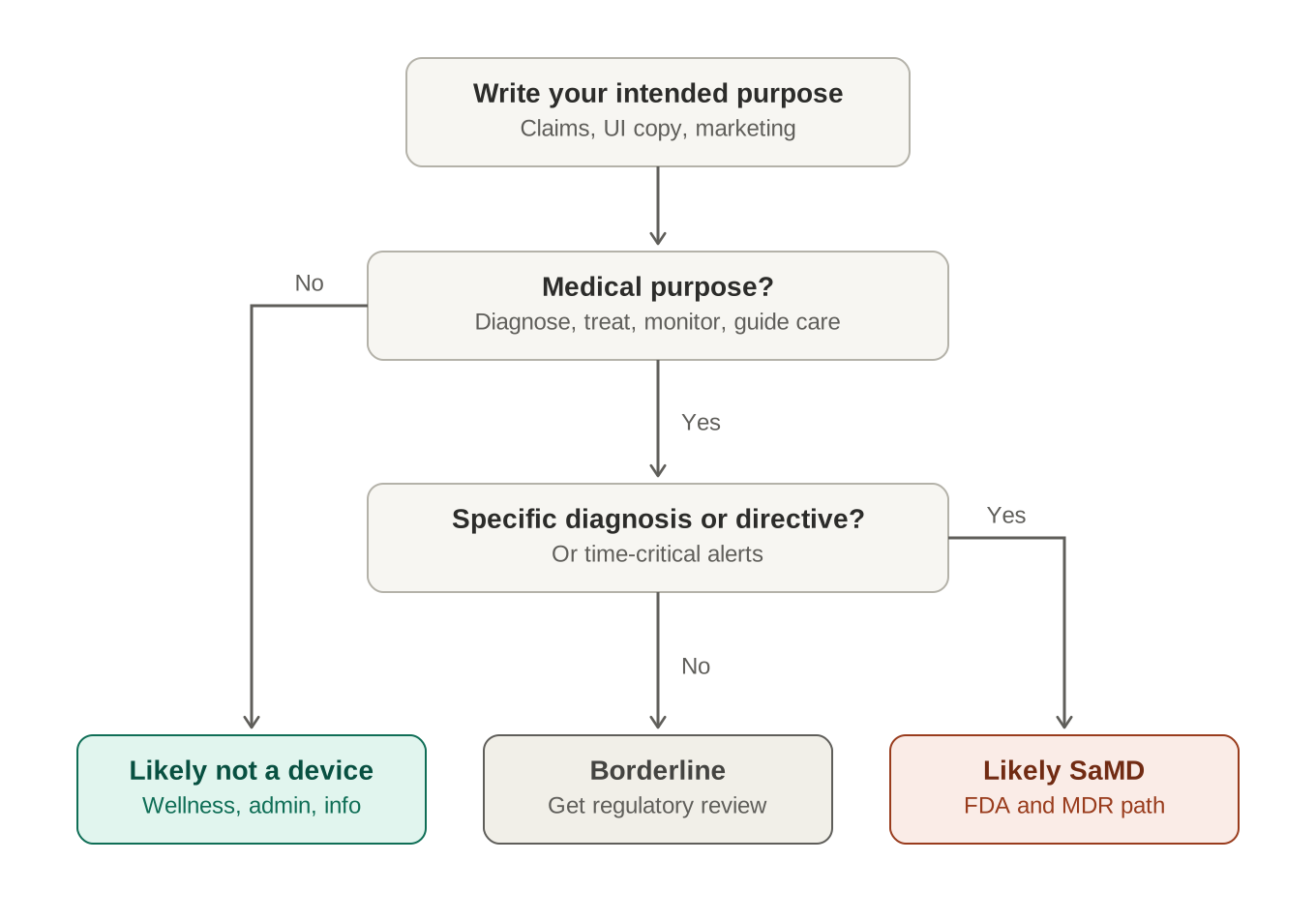
If you're building something that lands on the regulated side, see how we approach SaMD development.
Last reviewed: October 2026. This is general information, not regulatory or legal advice.
Software that performs a medical purpose, such as diagnosing, monitoring, or guiding treatment, without being part of a hardware medical device.
Usually not, if it sticks to general wellness claims. Once it diagnoses, names a condition, or sets clinical thresholds, it may be.
Yes, but adding those features changes your intended purpose. Plan the quality system and evidence before you add them.
Device law doesn't apply, but privacy, security, and advertising rules still can.
Subscribe to our newsletter for the latest insights, updates, and news from 26bitz.

Exploring Innovations in Healthcare Technology





Tell us what you're building. We reply within one business day with next steps and a rough estimate. Projects start at $5,000.